

In this article, we’ll use examples from our own projects to show you how to build and monetize a crypto website or faucet. For a crypto website, we’ll cover choosing a domain and hosting provider, setting up WordPress, and publishing guides and reviews that answer readers’ questions. We’ll also explain how to earn revenue through Google AdSense, other ad networks, and affiliate programs. If you’d rather build a crypto faucet, we’ll walk through setting reward amounts and payout rules, budgeting for payouts and operating costs, and checking whether revenue covers those expenses. Finally, we’ll show you step by step how to create and launch your own token on Pump.fun, from defining its purpose and preparing its name, symbol, and description to explaining the project clearly to your community. We’ll look at potential sources of revenue, what to budget for, and why launching a token alone doesn’t guarantee income.
Option 1: Build and Monetize a Crypto Website or Faucet

Why Choose the Crypto Niche to Make Money Online?
The crypto niche gives you several ways to grow and monetize a single project. For example, you could start a website with wallet reviews, crypto exchange comparisons, and mining guides. You can monetize that content through Google AdSense, other ad networks, and affiliate programs. As your site grows, you can sell in-depth guides, offer paid access to tools, or open an online store that accepts cryptocurrency.
You can also launch your own crypto faucet. We’ve put together a detailed, step-by-step guide with ready-to-use PHP code. It shows you how to set up the faucet, configure payouts, connect ad networks, and test everything before launch. See examples of our crypto faucets here >
How Much Do Crypto Site Earn from Ads Daily?
Let’s look at advertising revenue from our own crypto website: Bitcoin4u.top: We use Google AdSense alongside ad networks that pay in cryptocurrency. When choosing an ad network, we look at both payout rates and ad quality. We avoid intrusive formats, suspicious offers, and forced redirects. Daily revenue depends on how many people visit the site, where they’re located, how many pages they view, the rates each network pays, and how visitors interact with the ads.
Take a day with 300 unique visitors from search engines, social media, or other sources that bring in people interested in crypto. At that traffic level, ad impressions on our site typically generate the equivalent of 3–7 USDT per day. On networks that pay for clicks or other actions, genuine engagement can increase revenue. On some days, our total ad revenue has reached the equivalent of 20 USDT. These figures reflect our experience; even with the same number of visitors, earnings can vary.
To calculate what the site actually earns, we subtract operating and promotion costs, including the domain and hosting. Our current expenses are equivalent to 15–25 USDT per month, and our average monthly profit after these expenses is approximately 250 USDT. That monthly figure reflects our overall results, including higher-revenue days; it isn’t a projection based on the daily income from impressions alone.
What Do You Need to Build and Launch a Crypto Faucet?
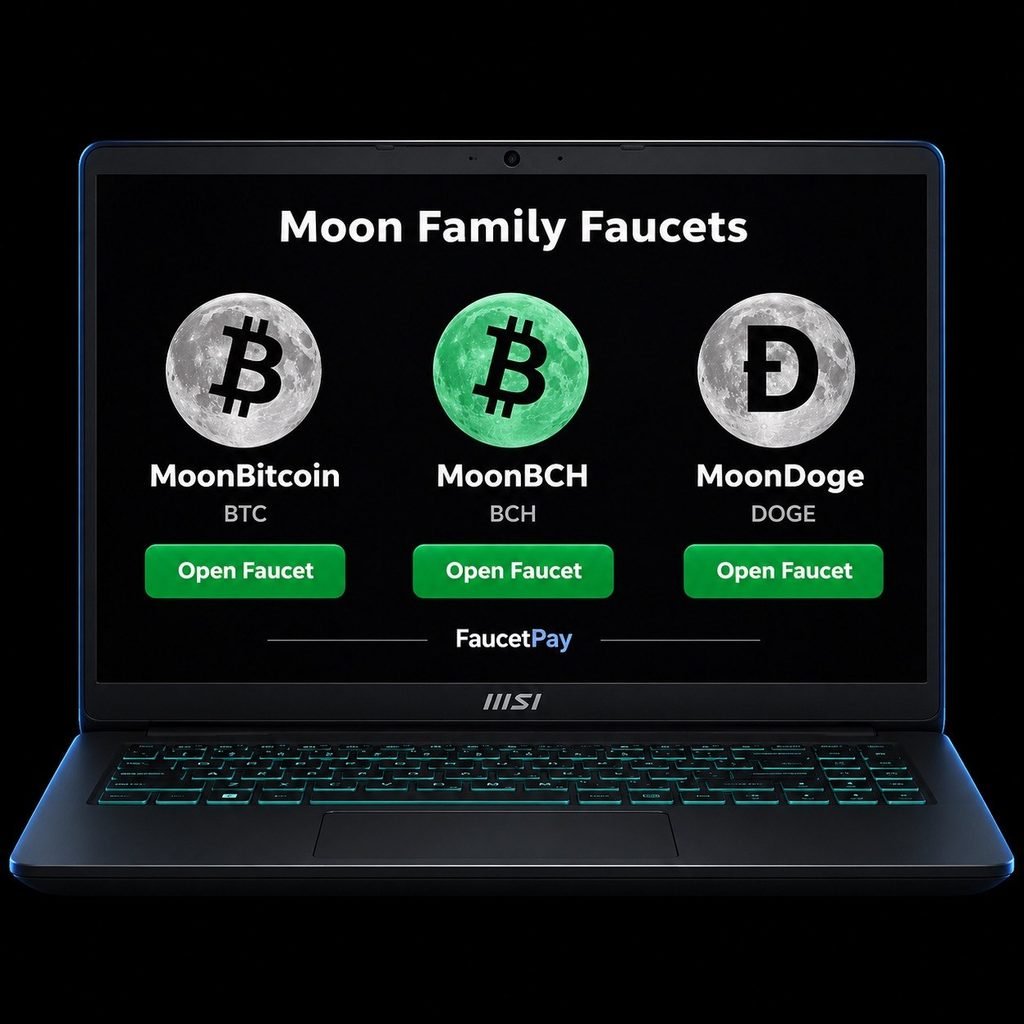
Many websites offer ready-made crypto faucet scripts, but in our experience, the best approach is to use your own PHP code and integrate the FaucetPay API to pay out rewards. This gives you more control over how you earn revenue, removes the need to rely on a third-party faucet platform, and can significantly reduce operating costs.
What We Offer:
We built three crypto faucets inspired by Moon Bitcoin: one for Bitcoin (BTC), one for Litecoin (LTC), and one for Dogecoin (DOGE). We refined the site layouts, set up payouts, and combined two revenue streams in a single process: monetized shortlinks and banner ads. To claim a reward, users complete a shortlink step, while banner ads are displayed on the faucet’s pages. This means a single reward claim can generate revenue from two sources.
Our Bitcoin faucet generated about 5 satoshis in ad revenue for every 1 satoshi paid out to users. This is what we saw on our own project. It’s not a guaranteed rate, and actual revenue depends on which ad networks you use.
See examples of our crypto faucets here >>
We’ve also put together a step-by-step guide with ready-to-use PHP code. Using our own projects as examples, we’ll show you how to build and host your faucet, integrate FaucetPay, configure rewards, add shortlinks and banner ads, and test payouts before launch.
What’s the Best Hosting for Your Crypto Website?

Based on my own experience, I recommend Hostinger.com. I like this hosting provider for its affordable pricing and user-friendly interface, which is easy to navigate at almost any skill level.
This is where I host my websites: I currently have five sites on a single hosting plan. For crypto websites and faucets, you can choose WordPress or host a custom PHP website. This allows you to use PHP code and snippets for flexible customization, add the features you need, and create a suitable interface. When choosing a plan, consider your project’s requirements, the number of websites, and the renewal cost.
Our detailed guide provides step-by-step instructions for creating a website on Hostinger—from choosing hosting and a domain name to launching a crypto faucet or a cryptocurrency-focused website.
Which Ad Networks Should You Use for Your Crypto Site or Faucet?

In this section, we’ll compare ad networks for crypto websites and show which ones accept crypto faucets. We’ll rank them from lowest to highest potential earnings and assess ad quality separately, looking at how relevant the ads are to your audience and whether any formats disrupt the browsing experience. We’ll also cover eligibility requirements, available ad formats, and payout methods to help you choose the right network for your project.
1. Google AdSense — The World’s №1 Ad Network
We use Google AdSense ad units on our website. For us, the main advantage is being able to control which ads our readers see. The Ad Review Center lets us review ads that have already appeared on our site and block any that aren’t a good fit.
Google AdSense offers several ad formats, but responsive ad units are the ones we’d highlight. They automatically adjust to the space available on the page, so the same ad unit can work on both desktop and mobile.
If your crypto faucet rewards users for viewing ads or following advertising links, it’s better to choose a different network. Google’s policies prohibit artificially inflating impressions or clicks and offering rewards for interacting with standard AdSense ads. AdSense is an option to consider for an informational crypto website that publishes reviews and guides. For a faucet, look for an ad network that explicitly allows your reward model..

2. Adsterra — A Google AdSense Alternative for Cryptosites and Faucets

Adsterra is an ad network we use on both our informational crypto website and our crypto faucets. In our experience, it works well for both: on the website, banners can appear alongside reviews and guides, while on a faucet, they can be placed on pages where users claim rewards.
Examples of Adsterra Ad Units:
Adsterra offers several ad formats, including standard and native banners, Social Bar, Popunder, and Smartlink. We particularly like banner ads because you can reserve space for them in the page layout so they don’t cover the text or get in the way. If you’re comparing Adsterra with AdSense, measure actual revenue per 1,000 pageviews under similar traffic conditions and check how the ads appear on desktop and mobile.
3. ZerAds — An Ad Network for Crypto Websites and Faucets with Low Traffic
ZerAds.com is an ad network with a straightforward setup and an easy-to-use dashboard. It’s an option for newly launched crypto websites and faucets, as ZerAds doesn’t list a minimum traffic requirement on its publisher page. To get started, add your site in the dashboard, choose an ad format, and place the ad code on your site. Available formats include banner ads, pop-ups, shortlinks, and paid-to-click (PTC) ads.
Examples of ZerAds Ad Units:

• Website and faucet owners can earn revenue by displaying ads. Advertisers can bid for placements on specific sites. If there are no active bids, ZerAds may display ads from its network when available.
• Advertisers can promote their websites, products, and services on selected sites or across the entire network.
• Users without a website can earn small rewards by viewing PTC ads. Partner platforms may also offer crypto faucets and paid browsing tasks, often called “surfing.” Available tasks and payout terms vary by platform.