
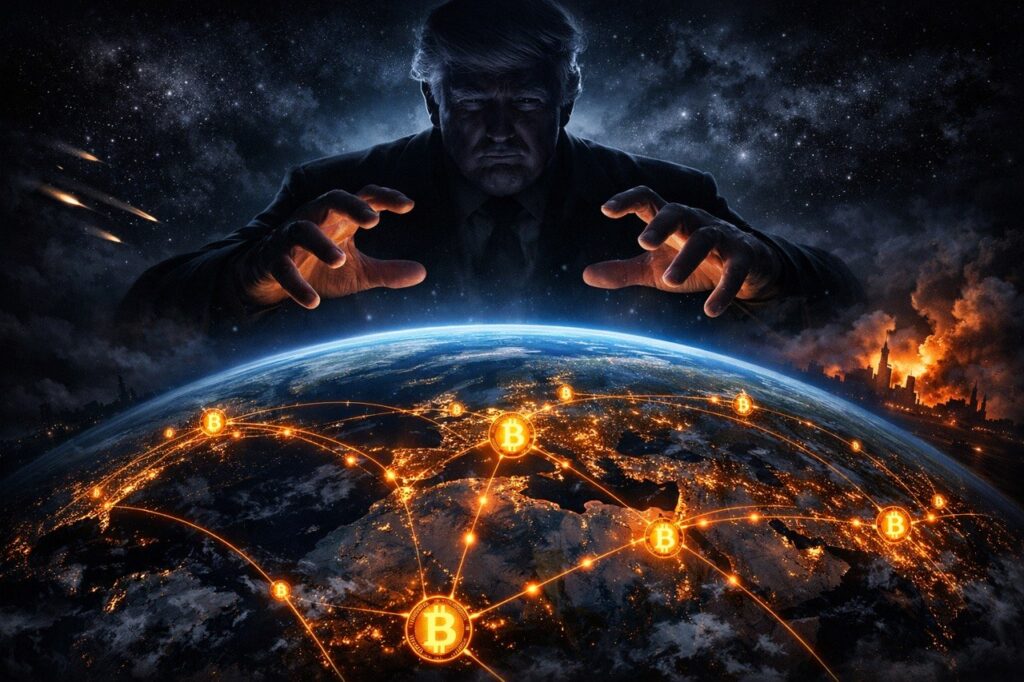
Crypto Market Manipulation 2026: Trump, Iran Crisis & Insider Trading Signals
In this article, we break down how Trump’s statements, the Iran crisis, and possible insider trading signals may be influencing the crypto market in 2026. We look at why Bitcoin reacts to geopolitical news, who really moves the market, and how traders can respond to crypto volatility more intelligently.
📍 Jump to
🧠 Why This Topic Matters in 2026
The crypto market is no longer driven only by charts, halving cycles, and blockchain news. In 2026, geopolitics, war headlines, macro sentiment, and political messaging are moving Bitcoin and altcoins much faster than before. This means traders are no longer competing only with other traders — they are competing with whales, institutions, market makers, and participants who may position before the crowd understands what is happening.
That is why topics like crypto market manipulation, Bitcoin price reaction to war, and possible insider trading signals have become central to understanding the market.
🎯 What Crypto Market Manipulation Means
Crypto market manipulation refers to actions that artificially push prices higher or lower. This may happen through coordinated buying, forced liquidations, rumor-driven pumps, low-liquidity exploitation, or headline-driven volatility. Because crypto trades globally and around the clock, market reactions can be more aggressive than in traditional finance.
In practice, manipulation does not always mean an illegal conspiracy. Sometimes it is simply the result of large players controlling liquidity, shaping sentiment, and taking advantage of panic or euphoria before retail traders can react.
🔍 How Insider Trading May Work in Crypto
Insider trading in crypto usually means trading on information that is not yet public. This could involve knowledge about upcoming geopolitical announcements, regulatory shifts, exchange actions, or other market-moving events. In a highly connected environment, even a small timing advantage can lead to outsized profits.
The main red flag is simple: the market moves before the public explanation arrives. When large trades appear before important announcements, many traders begin asking whether this was just smart positioning — or whether someone knew more than everyone else.
🏛 Trump and Crypto Volatility: Why Statements Move the Market
One of the clearest themes in 2026 is that Trump-related headlines can trigger fast market reactions. When the message signals escalation, markets often turn defensive and crypto can sell off. When the message suggests negotiations, delays, or de-escalation, markets can quickly flip into risk-on mode and Bitcoin often rebounds with altcoins following.
This matters because the market is no longer reacting only to facts — it is reacting to expectations, tone, and headline interpretation. In this environment, even one political statement can reshape liquidity and sentiment across the entire crypto market within hours.
🌍 Iran Crisis and Bitcoin: Why Geopolitics Hits Crypto So Fast
The Iran crisis has become a real-time stress test for crypto. When markets price in the risk of military escalation, Bitcoin can fall with other risk assets. When de-escalation headlines appear, Bitcoin can rally sharply. That pattern shows how closely crypto is now tied to global macro sentiment.
Bitcoin is often described as digital gold, but in short-term trading it also behaves like a high-sensitivity macro asset. That means conflict, diplomacy, sanctions, oil shocks, and policy rhetoric can all feed directly into crypto price action.
📊 Unusual Trading Signals Before the News
One of the biggest reasons this topic matters is the repeated appearance of unusual trading activity before major headlines. Traders watch for sharp volume spikes, sudden positioning changes, aggressive derivatives activity, and fast moves across correlated markets such as oil, stocks, and crypto.
These patterns do not automatically prove insider trading. However, they do suggest that some participants are better prepared than others. In a market as fast as crypto, preparation often matters more than prediction.
✅ Common warning signs
Large trades before major headlines
Volume spikes without public explanation
Risk-on or risk-off shifts across markets
⚠️ What not to assume
Not every move is insider trading
Algorithms also react aggressively
Correlation is not proof by itself
🐋 Who Really Moves the Crypto Market
Retail traders do not move the crypto market. The real influence comes from whales, institutional investors, market makers, hedge funds, and sometimes exchange-related liquidity flows. These participants can accumulate before a move, push price into liquidation zones, and use volatility to improve entry and exit conditions.
That is why many retail traders feel like they are always late. By the time the average person reacts to the headline, the larger players may already be reducing risk or taking profit.
⚖️ Is Crypto Still a Free Market?
Technically, crypto remains open and globally accessible. But in practice, it is not a level playing field. Access to information, execution quality, liquidity, and capital size all create major differences between participants.
So yes, crypto is still a free market in structure — but not always in outcome. The market rewards speed, preparation, and positioning more than idealistic narratives about fairness.
💰 How to Profit from Market Manipulation and Volatility
If the market is reacting to politics, macro shocks, and possible advanced positioning, then the solution is not panic — it is strategy. The best approach is to avoid chasing headlines, keep part of the portfolio in stablecoins, buy fear selectively, and take profit when the crowd becomes euphoric.
A smart crypto routine in 2026 often includes:
1) Following geopolitical and macro context daily
2) Keeping capital ready during panic
3) Using position sizing instead of emotional entries
4) Focusing on behavior and liquidity, not just headlines
⚠️ Key Risks Every Trader Should Understand
This environment creates several serious risks: false breakouts, liquidation cascades, extreme volatility, headline reversals, and emotionally driven trades. Markets can reverse just as fast as they move, especially when the original narrative is contradicted or denied.
That is why discipline matters more than conviction. A trader can be directionally right and still lose money if the entry, leverage, or timing is wrong.
🔎 People also search
❓ FAQ — Crypto Market Manipulation, Trump, Iran & Bitcoin (2026)
Is there real evidence of insider trading in crypto?
There are often suspicious timing patterns and unusual trades before major headlines, but that does not always prove insider trading. It does, however, suggest that some market participants may be positioned earlier than the public.
Why does Bitcoin react so strongly to geopolitical news?
Bitcoin trades globally 24/7 and now behaves as both a macro-sensitive asset and a liquidity-driven market. War headlines, diplomacy, oil shocks, and risk sentiment can all move price quickly.
Can Trump’s statements really affect the crypto market?
Yes. Political statements can change risk sentiment across global markets. When traders interpret comments as escalation, crypto can fall. When they signal de-escalation or negotiation, Bitcoin and altcoins can rebound fast.
Who really controls the crypto market?
The biggest influence usually comes from whales, institutions, market makers, and major liquidity providers. Retail traders mostly react to moves after they begin.
How can traders protect themselves in manipulated markets?
Use risk management, avoid chasing headlines, keep some funds in stablecoins, reduce emotional trading, and focus on market structure, volume, and liquidity instead of social media hype.
Is Bitcoin still a safe haven during crises?
Sometimes, but not always. Over longer periods Bitcoin may attract capital during uncertainty, but in the short term it can still trade like a volatile risk asset.
What is the biggest mistake traders make during geopolitical volatility?
The biggest mistake is reacting too late to headlines. By the time most people act, larger participants may already be taking profit or repositioning.
Can you profit from crypto volatility during war or political crises?
Yes, but only with a structured strategy. Volatility creates opportunity, but also amplifies risk. Position sizing, stablecoins, and discipline matter more than predictions.
Does unusual trading activity always mean manipulation?
No. Some moves are caused by algorithms, hedging, macro positioning, or normal liquidity flows. But repeated unusual timing can still be a useful signal to monitor.
What is the main conclusion for crypto investors in 2026?
Crypto is no longer driven only by technology. It is shaped by politics, macro events, liquidity, and psychology. Investors who understand these forces have a better chance of protecting capital and spotting opportunity.
© Bitcoin4U.top • Educational content • Not financial advice
